THE FRAME
Cross-braced veins
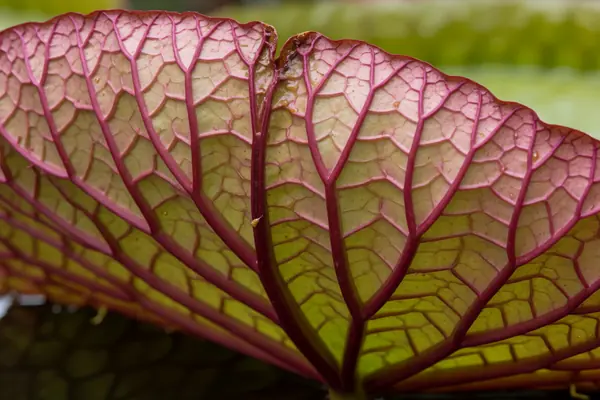
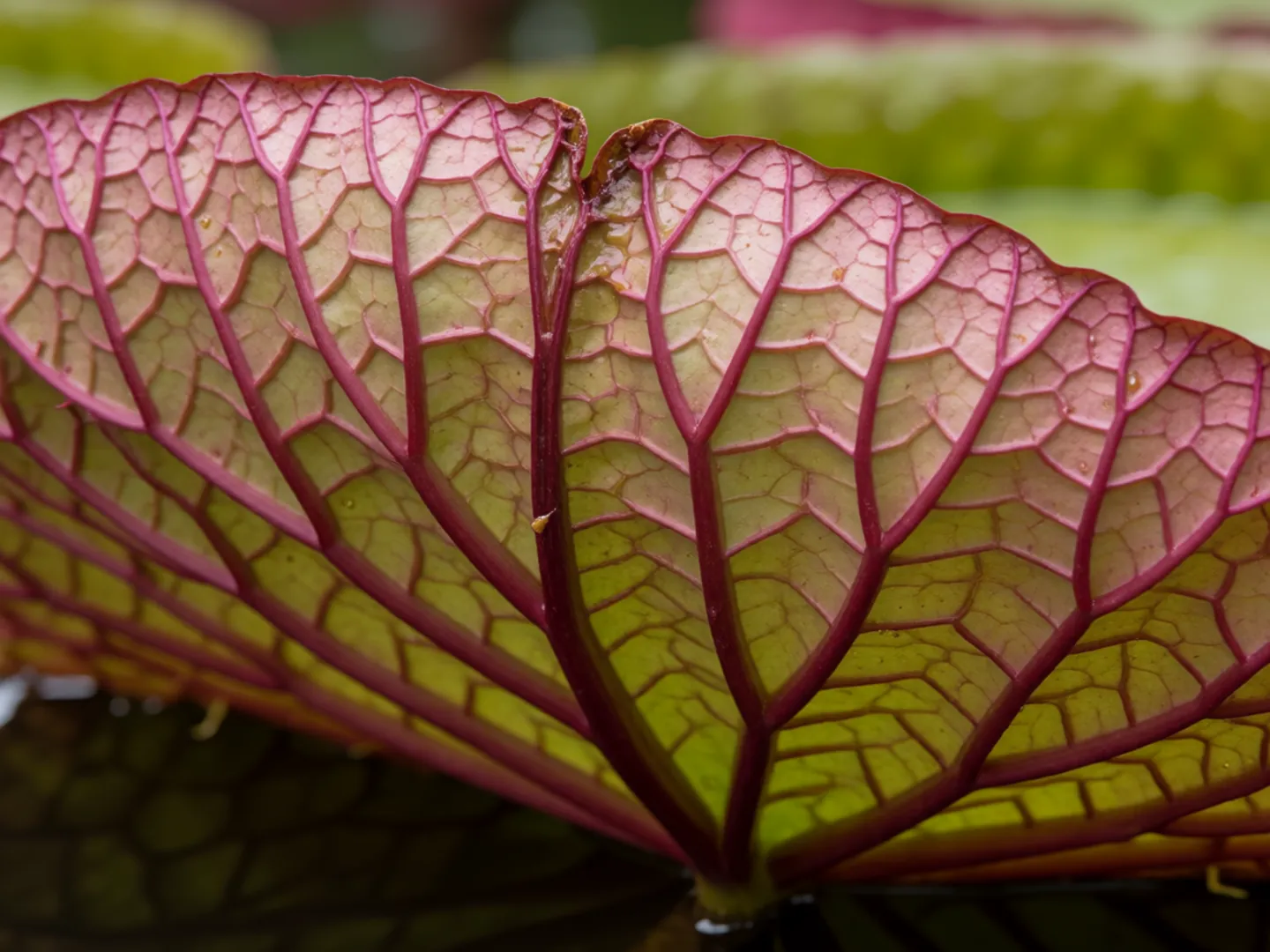
Thick veins branch across the underside like a tent frame with canvas stretched over it, giving a huge, thin leaf its strength.
Inside the leaf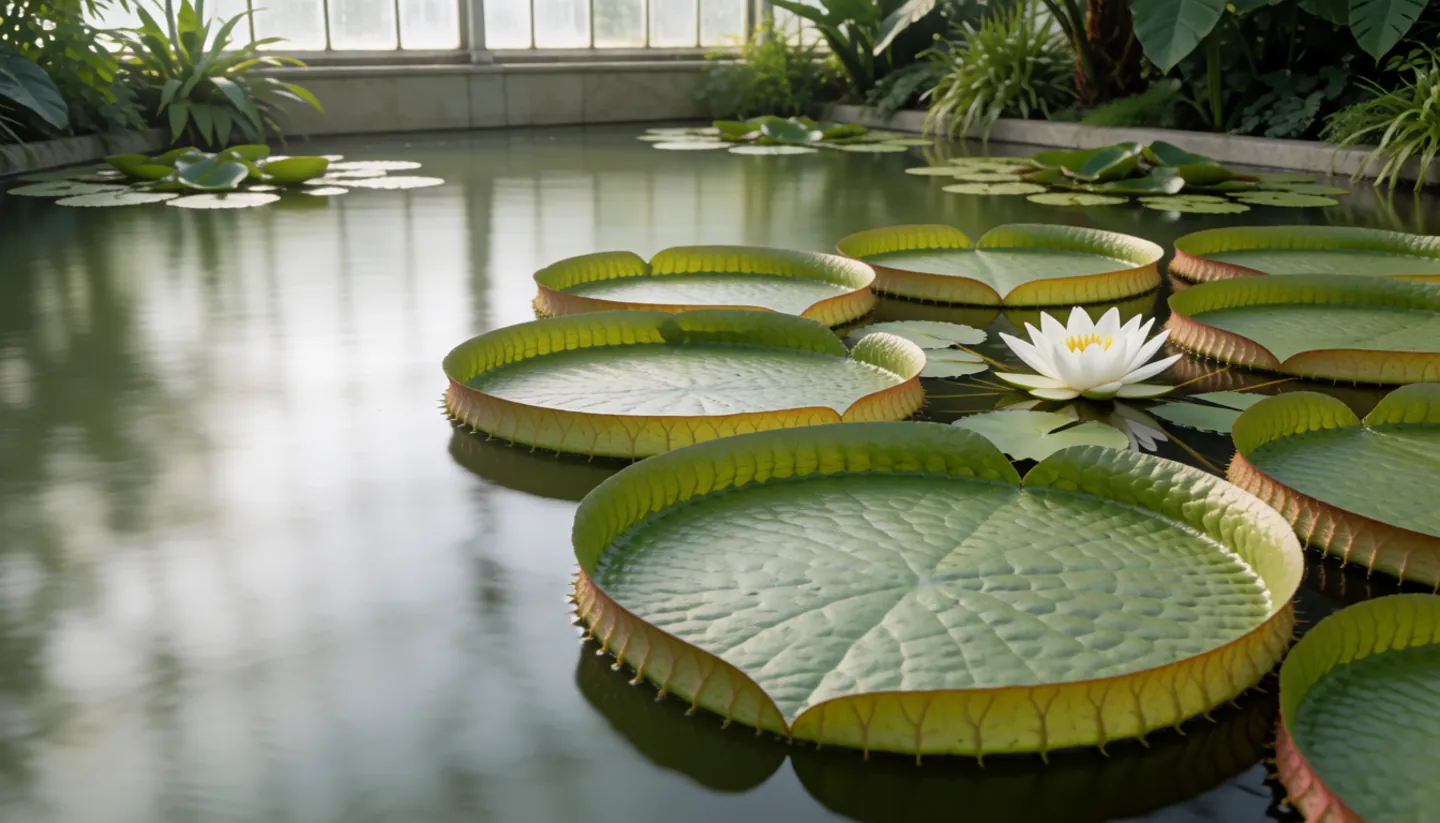
THE GIANT WATERLILY
2–3 M across, one leaf
AI-generated image, not a photograph of a real person or place.
The biggest lily pads on Earth are a feat of engineering.
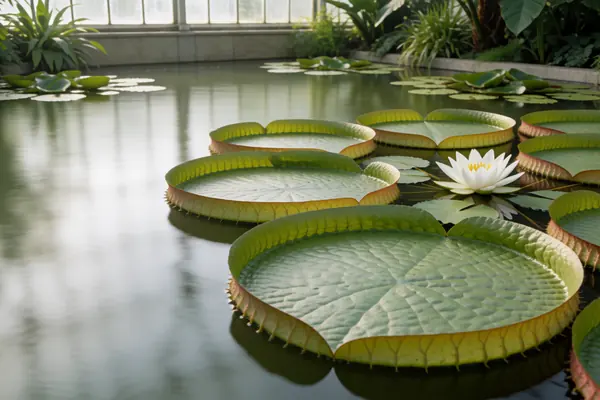
Victoria waterlilies from tropical South America float leaves two to three metres across. Underneath is a frame of branching, air-filled ribs, armed with spines, that inspired one of Victorian London's most famous buildings.
THE SHORT ANSWER
The top of the leaf is smooth and thin.
All the clever work happens underneath.
THE FRAME
Thick veins branch across the underside like a tent frame with canvas stretched over it, giving a huge, thin leaf its strength.
Inside the leafFLOATING
Gardens by the Bay explains that buoyant, air-filled tissue inside the ribs lets the leaves float, while sharp prickles deter animals from eating them.
See the numbersTHE FLOWER
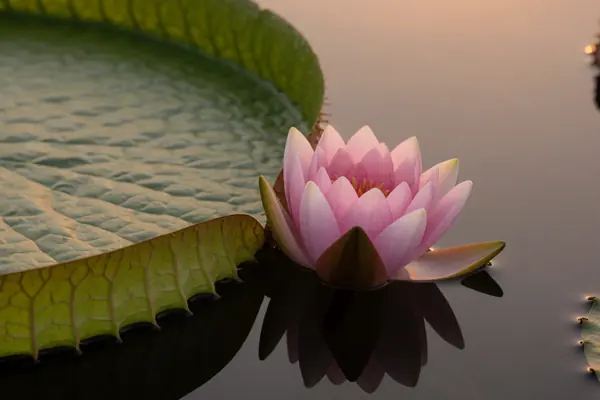
Each flower opens white on its first night and reopens pink on the second, in a timed partnership with scarab beetles.
Follow a flower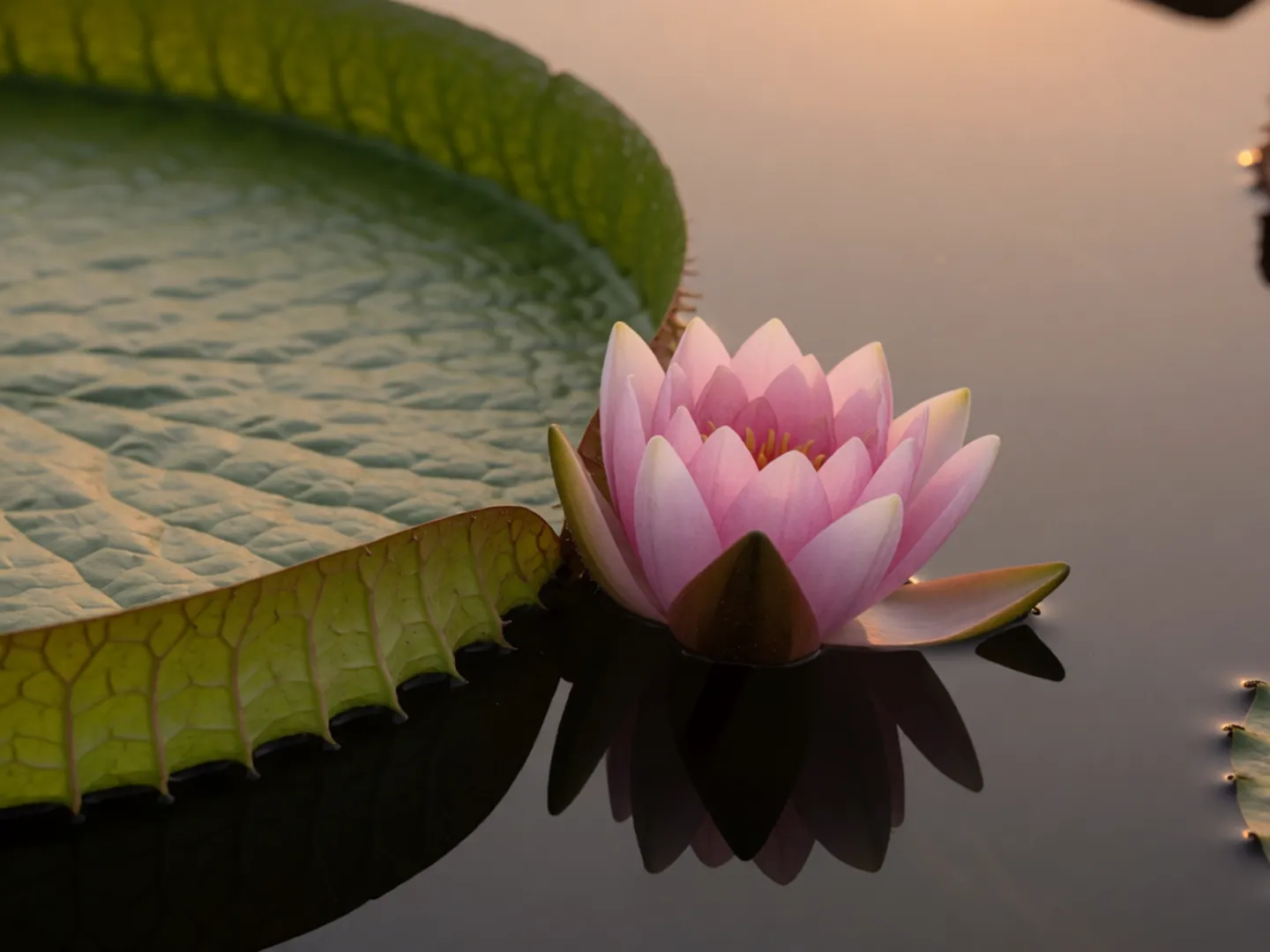
WHAT TO LOOK FOR
In the UK, Victoria waterlilies grow in heated glasshouse ponds at botanic gardens, usually best seen in summer. A few details are worth looking for.
The upturned edge makes each leaf look like a giant pie dish or tray floating on the water.
Oxford's Botanic Garden points to a notch on each side of the leaf that may let rainwater pour off.
Where a leaf edge lifts, you may glimpse the spiny ribs. Look, do not touch: the spines are sharp.
New flowers open in the evening, white on the first night and pink on the second.
TWO NUMBERS WORTH KNOWING
One number for the leaf,
one for how long a flower lasts.
2–3 m
Diameter of one Victoria leaf
Victoria leaves can grow 2 to 3 metres across, and a single plant can cover more than 1,500 square feet of water.
LEAF SIZE · GARDENS BY THE BAY
48 hours
How long each flower lasts
Each 20 to 30 cm flower lasts only 48 hours, opening slowly at sunset and closing by day.
FLOWER LIFE · GARDENS BY THE BAY
There are three recognised Victoria species. The third, V. boliviana, was described as new to science in 2022 by a team led from the Royal Botanic Gardens, Kew.
A FLOWER'S TWO NIGHTS
Pick a moment in a Victoria flower's short life to see what it is doing. The bar shows how strongly it is drawing in beetles.
Based on Gardens by the Bay, the University of Oxford Botanic Garden and the New York Botanical Garden.
FROM POND TO PALACE
Joseph Paxton first got Victoria amazonica to flower in 1849, in a heated indoor pond he designed at Chatsworth. He borrowed the leaf's cross-braced ribs for the cast iron and glass Crystal Palace, built for the Great Exhibition of 1851 in Hyde Park.
In 1851 Oxford's professor of botany, Charles Daubeny, had a glasshouse lily pond built at the Botanic Garden after seeing the plant at Chatsworth. In the UK the plant is grown under glass from seed each spring as an annual.
In conversation
Victoria leaves can grow 2 to 3 metres across. The New York Botanical Garden describes leaves stretching to nearly ten feet.
The ribs on the underside contain buoyant, air-filled tissue, and the branching network of veins gives the thin leaf its strength.
Sharp prickles across the ribs protect the leaf from animals that would eat it. Oxford's gardeners note they can catch out trainee horticulturists too.
It opens white and warm on the first night to attract beetles carrying pollen, then reopens pink on the second night to release them covered in its own pollen.
British explorers named the plant Victoria regia, later renamed Victoria amazonica, in honour of the newly crowned Queen Victoria in 1837.
Each figure on this page comes from the sources below.
ABOUT THIS NAME
soundfxpads.com is part of the DoodleSale portfolio. It isn't in an auction right now, but you can ask about leasing it.